
Navigating tender seasons: when Mother's Day feels like a weight you weren't warned about
A note before you read: this piece was written with Mother's Day in mind, but tender seasons come in many shapes. Whenever you're finding yourself in one, this is for you.
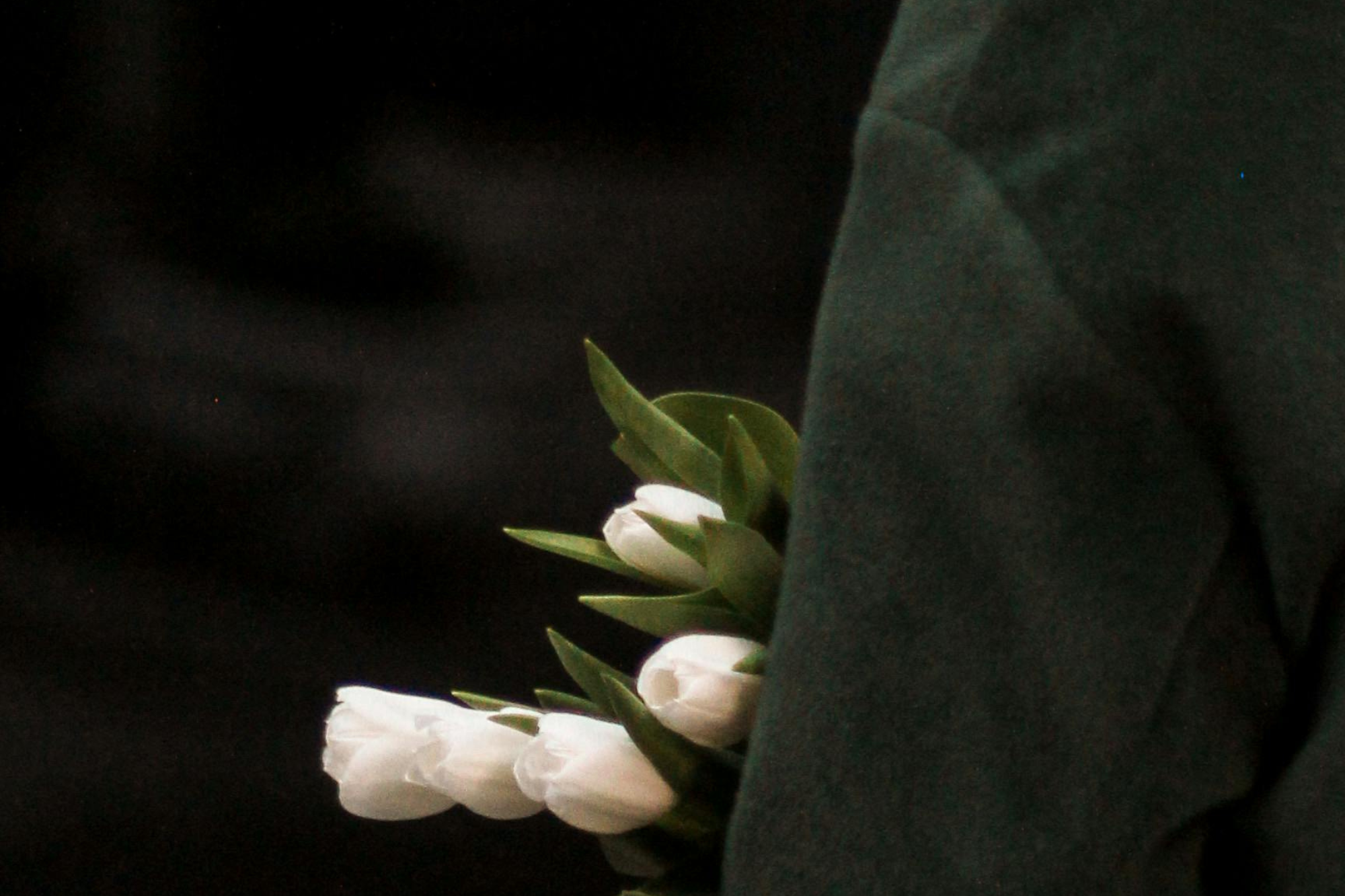
Nobody warns you.
Not about the way a date on the calendar can turn into something that feels like a physical thing. Not about how a Sunday in May can arrive carrying the full weight of everything you're carrying. The hope. The waiting. The grief that can be hard to name for a version of life you had quietly started to imagine, and aren’t sure how to speak about when it doesn’t unfold the way you thought it would.
And then the world around you fills up, with flowers, brunches, soft-lit photos, and you find yourself somewhere in the middle of it, navigating quietly.
Maybe this is the second time you’re moving through a day like this. Or the third. And that brings its own kind of awareness, not just of what’s coming, but of time having passed, and the quiet dissonance of a day that doesn’t yet reflect what you already feel inside.
We see you.
The things you're feeling are allowed to be here
Grief can feel strange when it lives around something you had begun to imagine or something that came close, and shifted again. There are no rituals for it, no cards. People don’t always know what to say, which sometimes means they say things that miss the mark entirely.
What they rarely say is: This is hard. What you're walking through is one of the most tender experiences a human being can have.
So let's say it here, clearly: whatever you are feeling right now is allowed.
The longing is allowed. The grief is allowed. The complicated, messy, contradictory feelings: joy for others mixed with ache for yourself, relief when a difficult day passes mixed with guilt for feeling relieved, those are allowed too. Jealousy is allowed. The quiet, shameful kind that you would never say out loud, that visits you at pregnancy announcements and baby showers and sometimes just in the middle of a Tuesday. That feeling is more common than you know, and it does not make you a bad person. It makes you a human being in pain.
You do not need to resolve these feelings to be okay. You do not need to choose between feeling them and getting through the day.
What your nervous system actually needs
Here is something we want to say carefully, because it matters.
When your body has been through cycles of hope and disappointment – when you've timed injections in restaurant bathrooms, when you've smiled at pregnancy announcements and cried on the way home, when you've sat in waiting rooms that have started to feel too familiar – your nervous system is not being dramatic. It is responding to real, sustained stress. It is doing exactly what it was designed to do.
And what it needs, in those moments, is not the absence of feeling. It needs the presence of safety.
Safety that your feelings have somewhere to go. Safety that they won't overwhelm you if you let them out. Safety that you are not alone in this.
That distinction, between forcing calm and actually feeling safe, is one of the most important things we've come to understand about supporting women through this journey. You cannot think your way to safety. You cannot willpower your way there. But you can create the conditions for it, gently, one small practice at a time.
One of the simplest and most scientifically supported ways to do exactly that? Writing things down.
The science of giving your feelings somewhere to go
Research into expressive writing, pioneered by psychologist James Pennebaker and expanded by decades of studies since, consistently shows that putting difficult emotions into words has a measurable effect on both psychological and physical well-being. People who write about emotionally challenging experiences report lower levels of distress, fewer intrusive thoughts, and better immune function over time.
But here's what we find especially meaningful about this for the fertility journey: journaling gives a voice to the feelings that are hardest to speak aloud.
Jealousy. Resentment. Fear. The ones that feel too dark or too uncomfortable to share even with the people closest to you. The ones you worry might make someone see you differently, or that you worry say something about who you are.
When you write them down, something shifts in the nervous system. The feelings stop sitting in the body as unnamed tension and become something more workable. Named. Witnessed. Yours.
You are not your darkest thought. But that thought needs somewhere to go, or it loops.
Journaling is not about finding the silver lining. It is simply about saying: this is what I'm feeling, and I'm letting it be here for a moment, on this page, where it can't hurt me.
That is regulation. That is care. That is, in its quiet way, an act of real self-compassion.
A few gentle invitations for a tender day
If you are reading this because you have a difficult day ahead of you, a day full of reminders, a day that asks too much, here are a few things we want to offer. Take what fits and leave the rest.
Permit yourself to opt out of what you cannot hold right now. Closing Instagram today is not avoidance it's protection. You are allowed to set the phone down. You are allowed to miss the group brunch. You are allowed to make today a day that belongs entirely to you.
Do something that feels like softness. Buy yourself flowers, because you deserve beauty even on hard days. Especially on hard days. Take a slow walk. Make the food that feels like a hug. Watch something that doesn't require anything of you.
Open a journal and write. Not neatly. Not hopefully. Just honestly. You might start with: What I'm not saying out loud today is… or The feeling I keep pushing away is… or simply: Today is hard because… Let it be imperfect. Let it be raw. That is exactly the point.
If you need somewhere to start, our 25 Gentle Practices guide is there. Rituals designed specifically for days that feel like too much, and for the quieter, everyday moments in between. Small things that help your nervous system find its footing when the ground feels unsteady.
And when words won't come at all, try one of our guided meditations. Sometimes the body needs to be led somewhere quieter before the mind can follow. You don't have to arrive there on your own. A space you can return to, whenever your body needs it.
Remind yourself that this season is not the whole story. We know that it is easier said than felt. But it's true. You are in the middle of something, not at the end of it. And the middle is where it is hardest to see clearly.
You don't have to hold this alone
At Florish, we built something for exactly this. For the moments when you need to process what's happening inside you, without performing for anyone else.
The Reading Room is where we write about the science and the feeling of this journey, together. A place to recognise what you might be carrying, and, if it helps, to begin putting some of it into words, in your own way. And when words feel like too much, our guided meditations are there to help your nervous system find its way back to safety. Because you don't need to be brave right now.
You need to feel safe.
And that starts with knowing you have somewhere to go.
Continue reading